



Electrifying Indian Highways: A Guidance Framework for Zero Emission Freight
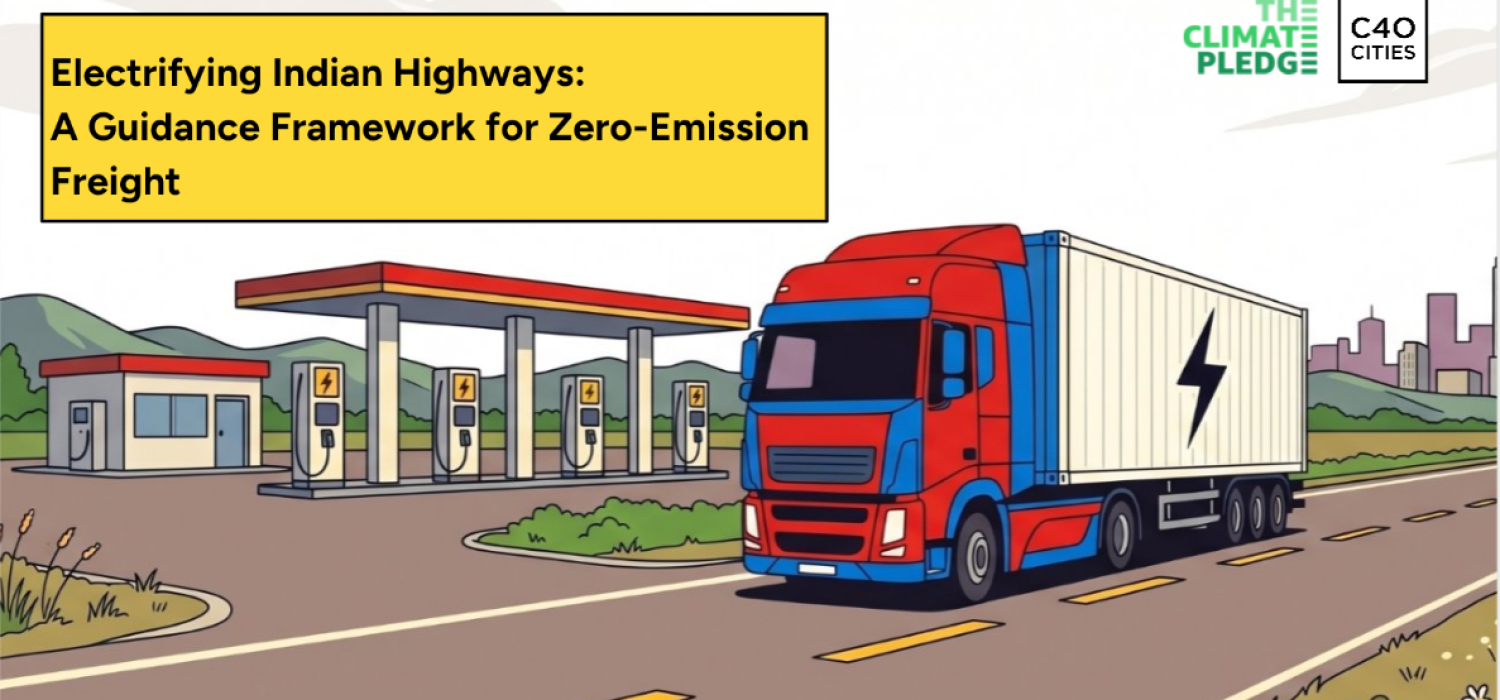
Electrifying Indian Highways: A Guidance Framework for Zero Emission Freight
- C40 Cities, KPMG India, The Climate Pledge
Date: 14 May, 2026
India’s BET market is emerging, but low adoption in the e-MHDT segment and fragmented pilots highlight the need for ecosystem-level interventions. This Guidance Framework addresses the critical gap between fragmented pilots and large-scale deployment by providing an ecosystem-level blueprint for action. Grounded in the Laneshift programme's comprehensive on-ground demonstration work, this report translates operational evidence into a practical, scalable framework.
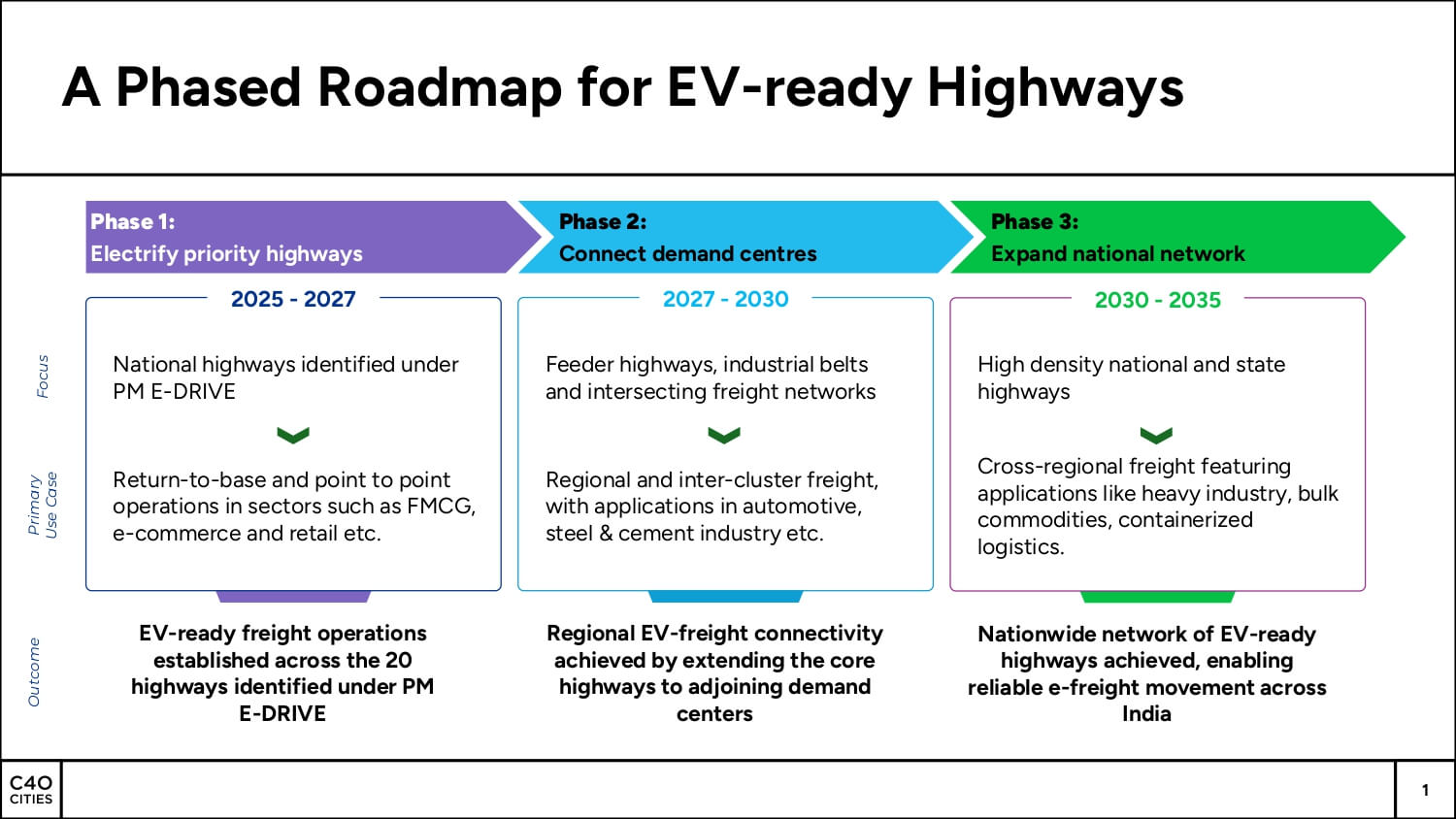
The Laneshift demonstration project, covering 200,000 kilometres of real-world operations on the Bengaluru-Chennai highway offers practical guidance on how India can operationalize its EV-ready highway vision. This framework lays out a structured approach to building EV-ready freight highways in India. Each pillar addresses a distinct barrier to adoption and together they form an ecosystem approach that integrates technology, infrastructure, business models, and social inclusion. It equips policymakers, fleet operators, and infrastructure stakeholders to build EV-ready freight highways, ensuring seamless electric freight integration across the nation
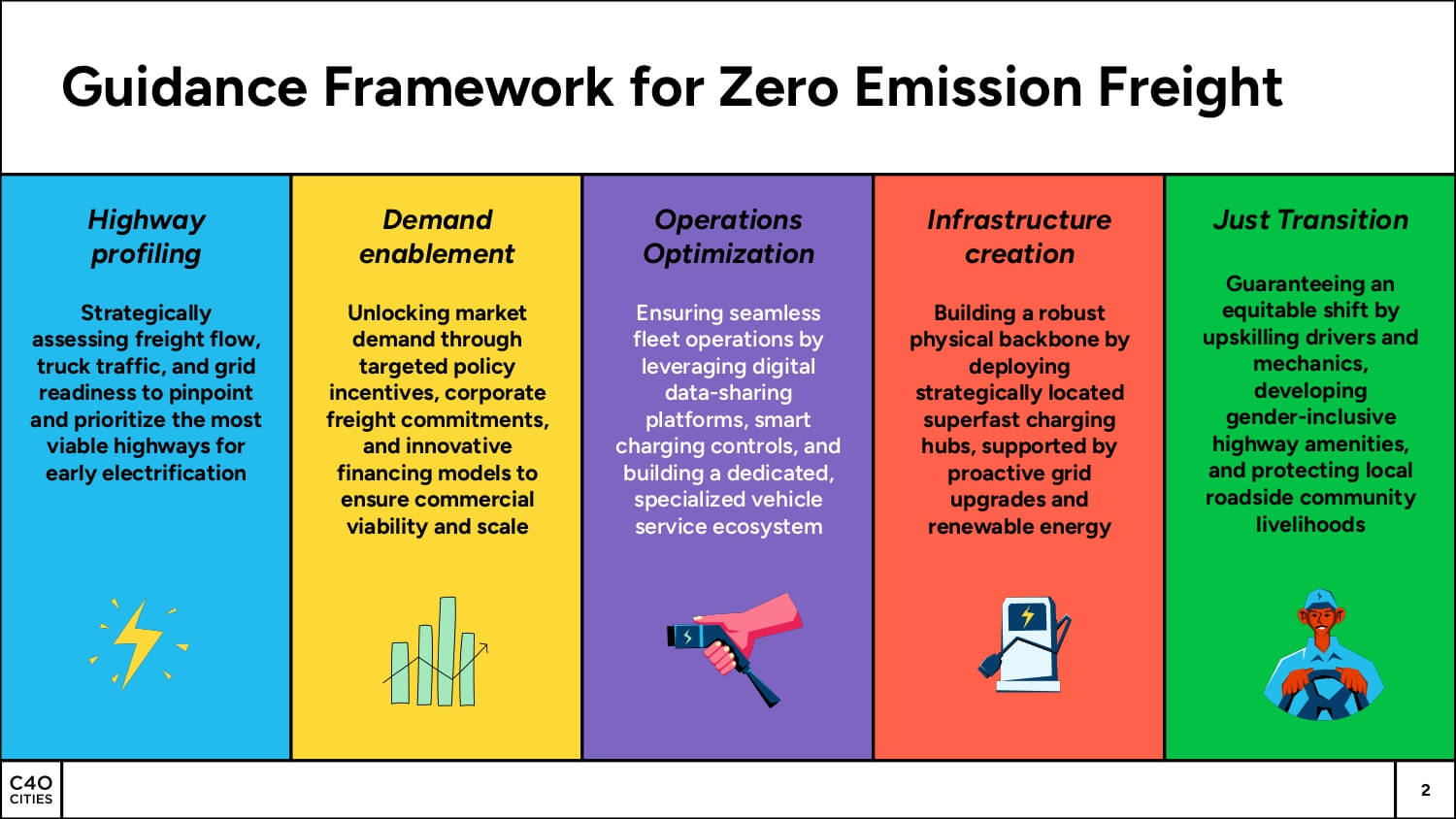
The framework also sets out a phased national roadmap: electrifying priority highways between 2025 and 2027, connecting regional demand centres by 2030, and expanding to a seamless pan-India national freight network by 2035.
For any queries or access issues, please reach out to Sama Arekal, sama.arekal@wri.org, +91 81236 32364.
Thank you for your support with this. We look forward to showcasing your product and supporting the electric freight ecosystem together!
The views expressed here are solely those of the authors and do not necessarily represent the views of e-FAST India or NITI Aayog. For further information or clarifications, please contact the publishing organization directly.